
Understanding the Effectiveness of Laser Therapy for Chronic Pain Relief
Posted in April 16, 2026
Learn how cold laser therapy supports chronic pain relief with a safe, non-invasive, drug-free approach for long-term comfort.
Living with chronic pain can slowly wear someone down in ways that are hard to put into words. The pain itself matters, but it's often everything underneath that makes life feel heavier over time. Missed plans. Sleepless nights. Low energy that never really comes back. It all piles up, along with that frustrating sense that your body is working against you instead of with you. Many adults between 45 and 75 know this cycle well. They're often stuck choosing between medications that come with side effects or procedures they're not quite ready to try, which is rarely an easy call. In my view, this is usually when Hot laser therapy starts to feel like something worth a real conversation with a trusted provider.
Hot laser therapy, also called High-level laser therapy, has been getting more attention as a gentle, drug-free option for chronic pain relief. There are no needles and no surgery, which lowers stress for a lot of people right away. There's also no downtime. Many describe sessions as calm and comfortable from start to finish. So what's actually going on during treatment? This article looks at how cold laser therapy works and what the science really says, beyond the headlines. It also looks at who may benefit most, including people with back pain, knee and joint pain, shoulder pain, neuropathy, and arthritis. Along the way, it explains what a typical treatment plan often looks like and why results usually build over time, not overnight.
What Hot Laser Therapy Is and How It Works
Hot laser therapy uses focused light energy to support the body's natural healing process. Unlike surgical lasers, it doesn't cut or burn tissue, which is usually the first concern people have. The light passes through the skin and reaches areas that are damaged or inflamed, quietly and without heat. Once it reaches those areas, it works at a very basic cellular level by helping cells make more energy. That extra energy is often what the body uses for repair and regeneration. It may sound simple, but the effect builds step by step, starting at the cellular level and spreading from there.
Researchers often call this process photobiomodulation. In simpler terms, the light sends a signal that encourages injured cells to get back to work, usually in a gradual way rather than all at once. As this response begins, blood flow can increase and swelling often goes down as the area starts to calm. Over time, nerves may begin working in a more typical way, which can reduce pain and stiffness. The change isn't instant, and it's usually a slow, steady shift rather than a quick fix.
Clinical data shows clear results for chronic pain conditions. Insurer-reviewed medical policies and published studies report steady improvements across several types of pain, which leaves little room for guesswork. The table below shows examples of pain reduction results seen in research.
Clinical outcomes reported in laser therapy research
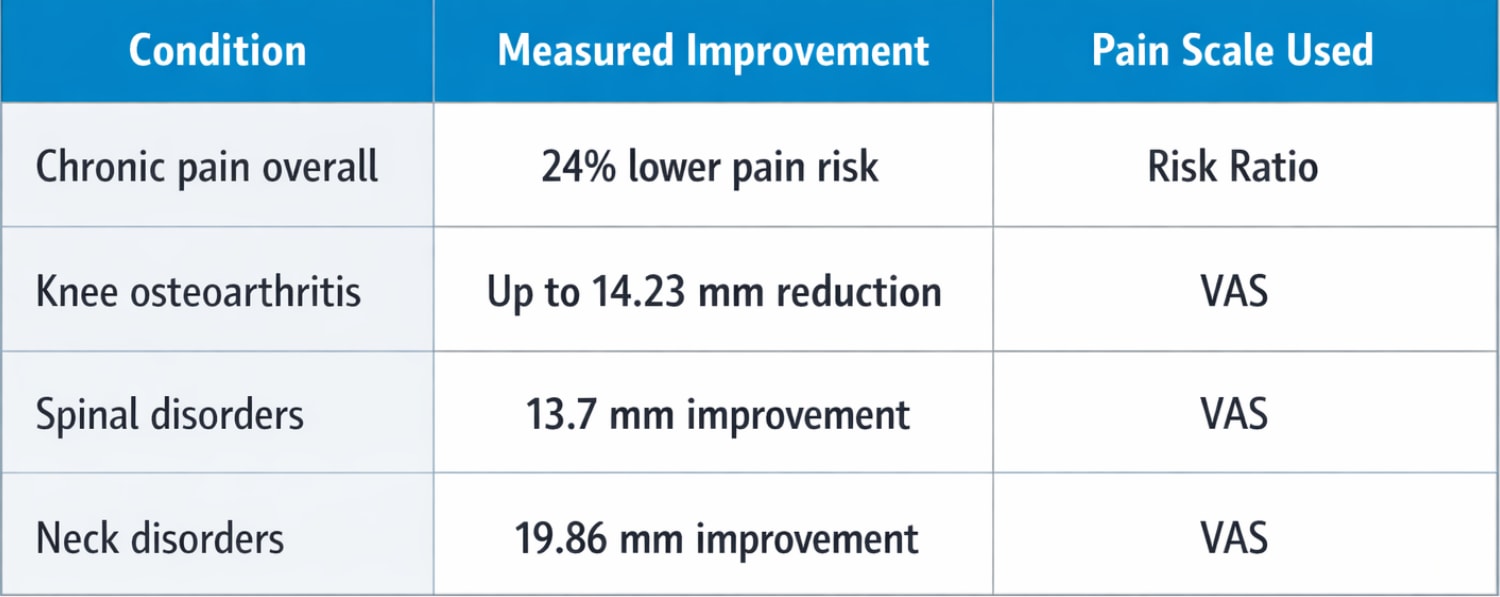
These numbers matter because they show cold laser therapy goes beyond trial and error. It has been studied, reviewed, and measured using standard pain assessment tools that doctors already use in everyday clinical settings.
Low-level laser therapy is beneficial for pain relief and can accelerate the body's ability to heal itself.
Dr. Jan M. Bjordal, National Institutes of Health
For more details on how the process works, see the laser treatment overview.
Why Laser Therapy Appeals to Adults 45 to 75
As people get older, the body often doesn't recover the way it used to, and that shows up in daily life. Joints can slowly wear down, and nerves may feel more sensitive than expected, which becomes frustrating over time. Many adults in their 50s, 60s, and 70s are also already taking medication for other health concerns. Adding another pill just to manage pain can feel like too much. Worries about side effects or how medications interact are common, and those concerns often grow with age.
This is where cold laser therapy tends to appeal to many people. It's non-invasive and drug-free, which checks an important box for those trying to limit medications. There are no needles, no sedation, and usually no downtime to plan for. Most people can go back to their normal routine right after a session, whether that's running errands, seeing friends, or heading home to relax. That ease is a big reason people are drawn to it.
Consistency also matters for this age group. The treatments stay gentle and can be repeated without putting extra stress on the body. Over time, small changes often add up. Many people notice easier movement before pain starts to ease, as inflammation tends to calm down first.
Clinics that use advanced systems, such as Summus laser technology, can deliver precise wavelengths and dosages. Getting the dosage right makes a real difference. Too little often doesn't help much, while too much usually isn't necessary.
LLLT has demonstrated clinically meaningful pain reduction in musculoskeletal disorders, particularly when appropriate dosage parameters are used.
” Dr. Cesar Fernández-de-las-Peñas, Journal of Orthopaedic & Sports Physical Therapy
To learn more about professional approaches, visit our specialized treatments page.
Conditions Commonly Treated With Laser Therapy
Hot laser therapy is often used for many chronic pain conditions. It usually works across the body and helps with areas patients deal with every day. In pain clinics, you see it a lot, sometimes aimed at one spot, which fits the kinds of issues they handle daily.
Chronic back pain often comes with muscle tension, along with disc and joint problems. Laser therapy is usually aimed at the lower back, where it can help calm irritated tissue and support blood flow. Many patients say movement feels easier and stiffness is less noticeable after a few sessions. Since tight muscles are often involved, I often see it used with gentle stretching or physical therapy, especially during longer-term rehab.
Knee and Joint Pain
Because knee and hip arthritis is very common, many adults look for ongoing pain relief. With regular use, laser therapy usually focuses on inflamed joint tissue and nearby muscles, and I think it often reduces swelling. This can make walking or standing feel more comfortable in most cases.
Shoulder Pain
Laser therapy is often used for rotator cuff and tendon irritation, as well as frozen shoulder. Improved blood flow can support damaged tissue and help it heal. Shoulder pain can make everyday tasks tough, like getting dressed or reaching overhead (it's frustrating).
Neuropathy
Neuropathy can cause burning, numbness, or tingling, usually in the feet or hands, and it can be annoying. Sometimes the pain feels sharp. Cold laser therapy works on nerve pathways and circulation. Results vary, in my experience, but many patients report improved comfort and feeling.
[V Blog | MLS Cold Laser Therapy Explained — Drug-Free Pain Relief at Core Chiro Rehab Southfield MI](https://www.youtube.com/watch?v=se4Me_Ypn04)
For an in-depth look at neuropathy treatments, read [laser therapy for neuropathy: non-surgical pain relief](https://drficcolaser.com/articles/laser-therapy-for-neuropathy-non-surgical-pain-relief-in-2026 ).
What a Typical Laser Therapy Treatment Plan Looks Like
Many people wonder what a session actually feels like, and for most, it's easier than they expect. Cold laser therapy is generally calm and straightforward, with no complicated setup. You stay fully clothed the whole time, which often surprises people. The provider places the laser directly over the sore area and keeps it there. Some people notice a gentle warmth, while others don't feel much at all. Both are normal. Sessions usually last around 10 to 20 minutes, depending on the area being treated and how sensitive it is.
What often surprises people more is the timing. Treatment plans are usually spread over several weeks, with visits a few times per week at the start. That early phase helps the body respond and get into a healing pattern, especially when pain has been present for a long time. As symptoms improve, appointments are often scheduled farther apart, which makes the plan feel easier to keep up with.
Laser therapy also isn't usually a quick fix for long-term pain. Chronic issues tend to build up over time and often respond better to steady, repeated care. In my experience, people who follow the full plan often report better results than those who stop early.
Many physical therapy experts share that laser therapy often works best with simple supportive care. Light movement or small posture changes can help, especially once pain has eased enough to make moving feel possible again.
Safety, Side Effects, and What to Expect
One reason cold laser therapy keeps getting attention is safety, and that usually holds up when you look at it more closely. It's generally considered low risk when done by trained professionals, which makes a real difference. The light doesn't harm tissue, and when proper guidelines are followed, there are no known long-term side effects. For people who like to be careful about trying new treatments, that can be reassuring.
Many people are surprised by how little they notice during a session. Most feel nothing at all. Some have mild soreness afterward, similar to how your body feels after light exercise, but it's usually not strong. That feeling tends to go away quickly. Since there's no downtime, most people drive themselves home and go on with their day as usual.
Results aren't the same for everyone. Laser therapy often helps with pain, but outcomes depend on what's being treated, how long it's been going on, and overall health. A good provider reviews your history and sets clear, realistic expectations.
For adults dealing with multiple health issues, this gentle option can feel safer than injections or long-term medications. Avoiding needles, side effects, and ongoing prescriptions can make daily life feel a little easier.
How to Decide If Laser Therapy Is Right for You
Choosing a pain treatment is personal, it's really your call, and yeah, that can feel like a lot. I find it helps to think about a few down-to-earth questions instead of big promises. Are you looking for a non-invasive option, and do you want to avoid drugs or surgery at the same time? Another practical thing to ask is whether you can realistically stick with a series of treatments over time, since that often makes a difference. If most of those answers are yes, cold laser therapy may be worth a closer look.
The clinic you choose can matter just as much. You'll often notice a real difference with practices that focus on chronic pain and long-term care instead of quick, one-off visits. Clear explanations help too. Providers who take time to explain how the therapy works and use modern laser equipment are usually easier to trust. If you're in Atlanta, clinics like Dr. Ficco Laser, focus on non-surgical, drug-free care and modern laser systems for chronic conditions, which is often a good sign.
Before anything else, a proper evaluation should come first, since pain is usually complex and rarely follows a neat or predictable pattern.
For more information about available services, check the services page.
The Bottom Line on Living With Less Pain
Chronic pain does not have to control every part of your life. Cold laser therapy offers a calm, science-backed option for people who want relief without drugs or surgery. Research shows real improvements in pain scores for conditions like back pain, arthritis, and neuropathy. Experts recognize its role when used with proper dosage and care.
If you are between 45 and 75 and tired of managing pain the same old way, it may be time to look at something different. Laser therapy will not erase years of wear overnight, but for many, it opens the door to better movement and more comfortable days. The first step is learning your options and choosing a provider who listens. Relief often starts there.
Keywords: cold laser therapy, chronic pain relief
Take the First Step Toward Better Health
Ready to start your healing journey?
Fill out the form below, and I’ll get back to you to schedule your personalized consultation. Your health is my priority!
Contact Me
Give us a call
(770) 497-0073Send us an email
[email protected]